Why Motorized Shading Should Be Planned Before Construction Begins

A homeowner falls in love with the idea of hidden motorized shades.
The architect incorporates clean ceiling details. The interior designer develops a vision for the space. The builder moves the project forward.
Months later, someone asks a seemingly simple question:
"Where are the shades going to go?"
At that point, the answer is not always simple.
At ACS, one of the most common patterns we see is that motorized shading enters the conversation after many of the architectural, electrical, and construction decisions affecting the system have already been made. The project can still move forward, but the discussion often becomes one of compromise.
For architects, builders, designers, and homeowners, those compromises are often avoidable when the conversation starts earlier. Connect with the ACS team of experts early in your project for the best possible outcome.
Window Treatments Seem Simple Until They Aren't
Motorized shading occupies an unusual place in luxury residential projects.
Most people understand that window treatments will be part of the finished home. Yet they are often viewed as a final selection rather than a system that relies on planning and coordination throughout construction.
The challenge is that many of the decisions that influence a shading system are made long before the shades arrive on site.
Ceiling details are finalized. Framing is completed. Electrical infrastructure is installed. Millwork is designed. By the time window treatments become an active topic of discussion, the project may already be working within constraints established months earlier.
That does not mean the desired outcome is impossible. It simply means fewer options are available than there were at the beginning.
One important distinction is that planning for motorized shading and selecting the finished window treatments are not the same decision. While wiring, recessed pockets, and infrastructure should be coordinated early in the project, fabric selections can often wait until paint colors, furnishings, and other interior details have been finalized. This approach preserves design flexibility while ensuring the infrastructure is in place to support the finished system.
Every Project Eventually Becomes a Conversation About Compromise
One theme appears again and again in complex residential projects.
There is usually a moment when the team must balance what was originally envisioned with what the project’s conditions will realistically allow.
Motorized shading is no different.
A homeowner may want shades completely concealed from view. An architect may want uninterrupted ceiling lines. A designer may prefer dual shades that provide both privacy and room-darkening performance. All of those goals can coexist, but only when the infrastructure supporting them has been considered early enough.
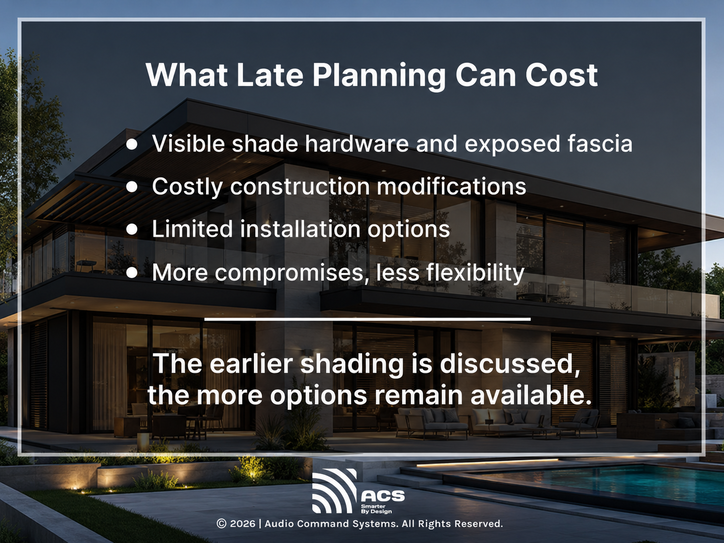
When shading is addressed late, the conversation often shifts.
Instead of discussing the ideal solution, the team begins discussing alternatives:
- Should the shades be battery-powered because wiring was never installed?
- Can the ceiling detail be modified to accommodate a recessed pocket?
- Will exposed hardware be visible in a room where the original intent was complete concealment?
None of these is a project-ending problem. They are simply decisions that become more difficult and more expensive once construction is already underway.
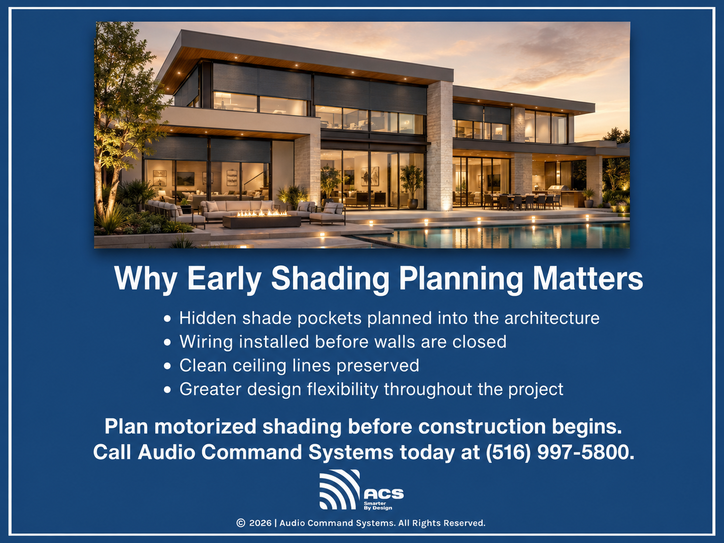
Hidden Shades Require Coordination Across Multiple Trades
Many of the most desirable shading solutions also require the greatest level of coordination.
A recessed shade pocket may look like a small architectural detail, but its success depends on multiple teams working from the same plan. Some things to consider are:
- Window size
- Shade size
- Fabric selection
- Motor requirements
What appears straightforward on a drawing can become more complicated once real-world conditions are introduced. Larger windows often require larger shade assemblies. Larger assemblies require more space. A ceiling detail that works perfectly in one room may need to be adjusted in another.
This is why shading conversations are most productive when they happen while the project still has flexibility.
Architects, builders, electricians, designers, and technology integrators all bring a different perspective. Early collaboration between architects, designers, and ACS experts gives each discipline an opportunity to influence the outcome before major decisions become difficult to change.
Homeowners Feel the Impact Long After Construction Ends
Many shading-related compromises do not become apparent until after move-in.
A homeowner expecting complete blackout conditions may notice small amounts of light around the edges of a shade. A battery-powered solution may require future maintenance access that was never part of the original design discussion. A visible fascia or housing may draw attention in an otherwise carefully detailed room.
Individually, these issues may seem minor. Collectively, they shape how the home feels to live in every day.
The most successful shading systems tend to fade into the background. They operate reliably. They align with the design intent. They feel as though they were always meant to be part of the architecture.
That level of integration rarely happens because of a product choice alone. More often, it is the result of planning, coordination, and decisions made early in the project’s life.
Thoughtfully planned motorized window treatments do more than disappear into the architecture. They help manage daylight throughout the day, provide privacy when it's needed, protect furnishings, artwork, and flooring from prolonged sun exposure, and contribute to a more comfortable indoor environment. Just as importantly, they enhance the overall aesthetic of the home while adding another level of convenience and sophistication to everyday living.
Early Planning Protects Design Intent
Luxury residential projects involve hundreds of decisions. Some are visible. Others remain hidden behind walls and ceilings. Motorized shading often falls into the second category.
When the right conversations happen early, project teams retain flexibility.
- Design intent is easier to preserve.
- Infrastructure can be planned appropriately.
- Future service requirements can be addressed before they become limitations.
Most importantly, homeowners are more likely to receive the experience everyone originally envisioned.
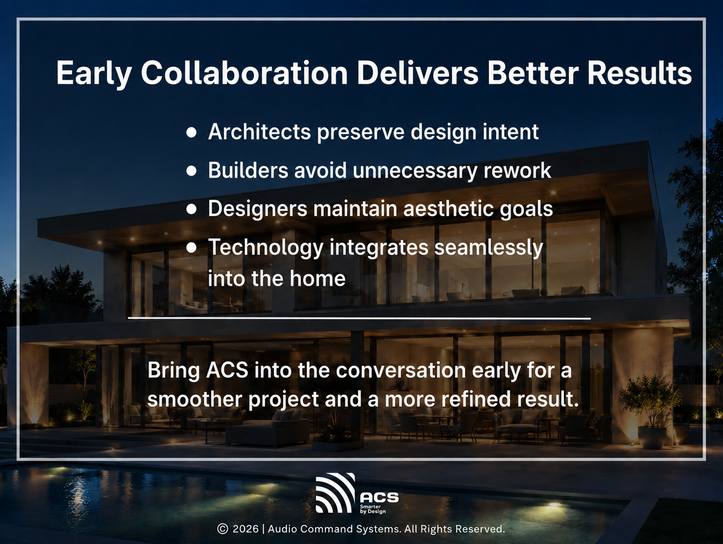
By the time a project reaches the finish phase, the most important shading decisions have often already been made. At ACS, we have found that the best time to discuss motorized shading is not during installation. It is during the planning stages that the ACS proven process for advanced home integration and automation is most beneficial to architects, builders, designers, and technology professionals. We can still shape the outcome together.
Get in touch with ACS experts early in your project to discuss your needs. We have locations in New York, Connecticut, Florida, and California to handle your specific project requirements.


